

A gated community in Kenya is a group of homes inside one boundary wall, with a controlled gate, shared estate roads and utilities, and rules for how the shared parts are run. From the outside it looks simple. Behind it is a gated community development process that runs from land purchase to the day each owner receives a title, and every stage has its own approvals, costs and risks.
This guide explains how that process works, who approves what, and what a buyer or landowner should check at each step.
Key takeaways
- Subdivision, change of user and building plans all need development permission from the county government under the Physical and Land Use Planning Act 2019.
- Subdividing agricultural land needs Land Control Board consent; under section 6 of the Land Control Act, a controlled transaction without consent is void.
- Housing estates of more than 100 units are classed as high-risk projects by the National Environment Management Authority (NEMA) and need a full environmental assessment study.
- Owners receive either an individual title for a subdivided plot, or a sectional title for a unit under the Sectional Properties Act 2020.
- Estate infrastructure (roads, storm-water drains, water, sewer or treatment, power, lighting) is usually built before or alongside the homes and is a large share of the cost.
- Shared areas must be owned and run by someone: a management company or, for sectional properties, a management corporation of the owners.
What is a gated community development in Kenya?
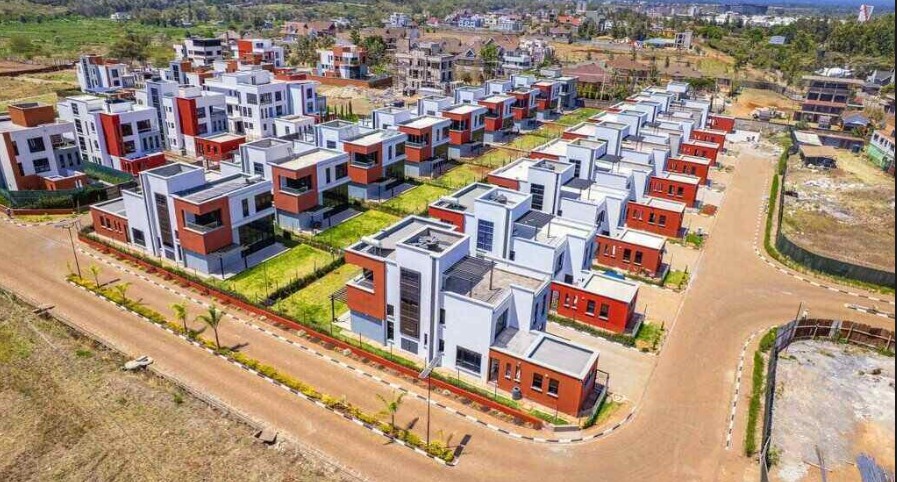
A gated community development is a planned housing project in which one developer secures a block of land, plans it as an estate, builds the shared infrastructure and either builds the homes or sells serviced plots. The finished estate has a defined boundary, a controlled entrance, internal roads and common areas such as open space or a clubhouse.
In Kenya you will see three common forms:
| Type | What the owner gets | Typical title |
|---|---|---|
| Plot-and-house estate | A house on its own subdivided plot (for example an eighth or quarter acre) | Individual freehold or leasehold title per plot |
| Townhouse or cluster scheme | A house that shares a parcel, walls or common areas with others | Sectional title under the Sectional Properties Act 2020 |
| Apartment estate | A flat in one or more blocks inside a gated compound | Sectional title for each unit |
The type matters because it decides the approvals, how titles are issued and how the shared parts are managed.
How does the land stage work?
Everything starts with land that can legally carry the estate. A developer or landowner normally:
- Searches the title at the land registry or on Ardhisasa, the Ministry of Lands' online land system, which the State Department for Lands says is live in Nairobi, Murang'a, Mombasa and Isiolo. Elsewhere, searches are done at the county registry.
- Confirms the user (zoning). Land registered for agriculture cannot simply be filled with houses; a change of user is needed, and the General Development Permission and Control Regulations 2021 set out that application.
- Checks access and services: road frontage, distance to water mains and sewers, power lines, flood risk and riparian land.
- Obtains Land Control Board consent where the land is agricultural and is being sold or subdivided.
- Pays stamp duty on the purchase. Since an April 2024 directive, transfers in gazetted towns and municipalities attract 4% stamp duty, according to EY; confirm the current rate and any recent changes with your advocate.
Our land due diligence checklist goes through these checks in detail.
Which approvals does a gated estate need?
Under the Physical and Land Use Planning Act 2019, subdivision, amalgamation, change of user, extension of lease and building plans all need development permission from the county planning authority, as Mondaq's summary of the Act explains. Building without permission can lead to enforcement and demolition.
| Approval | Who issues it | What it covers |
|---|---|---|
| Change of user (if needed) | County planning authority | Allowing residential use on the land |
| Subdivision scheme | County planning authority, then survey and land registry | Dividing the mother parcel into plots, roads and open space |
| Land Control Board consent | Land Control Board for the area | Sale or subdivision of agricultural land |
| Environmental licence | NEMA | Environmental impact of the estate |
| Building plan approval | County government | Architectural and structural drawings for the homes |
| Project registration | National Construction Authority (NCA) | Registering the construction project before works start |
| Water, sewer and power | Local water services provider, NEMA, Kenya Power | Connections, effluent and supply |
For NEMA, the risk category drives the level of study. NEMA-filed reports, such as this environmental impact assessment for a 212-unit residential development, classify "new housing estate developments exceeding one hundred housing units" as high risk. Under the 2025 environmental assessment regulations, high-risk projects need a full environmental assessment study, medium-risk projects a comprehensive project report and low-risk projects a summary project report.
The NCA says on its project registration page that registering the project is the developer's duty, not the contractor's. Our guide to building plan approval in Nairobi explains the county steps.
What infrastructure does a gated community need?
Infrastructure is what turns a field into an estate. It is designed with the subdivision and is usually built before most homes go up, so that construction traffic, drainage and services are in place.
A typical scope includes:
- Boundary wall and gatehouse, with a controlled entrance.
- Estate roads, with kerbs, a chosen surface (gravel, paving blocks or tarmac) and road reserves wide enough for services.
- Storm-water drainage, sized for heavy rain and discharging safely off site.
- Water: a connection from the licensed water services provider, a borehole with Water Resources Authority (WRA) permits, or both, plus storage and reticulation (the pipe network to each plot).
- Sewer or treatment: a connection to the public sewer, or an on-site treatment plant that needs a NEMA effluent discharge licence.
- Power and lighting: Kenya Power supply, often underground cabling inside the estate, and street lighting (solar is common).
Our guide to estate roads, drainage, water and power explains each of these in more depth.
How do buyers get a title in a gated community?
This is the question buyers ask most, and the answer depends on the type of estate.
Subdivided plots. The developer's surveyor prepares the subdivision, the county approves it, the survey is registered and the land registry issues a new title for each plot. When a buyer completes payment, the plot title is transferred into the buyer's name, with stamp duty paid on the transfer.
Sectional units. Townhouses and apartments that share a parcel are registered under the Sectional Properties Act 2020. According to DLA Piper's guide to the Act:
- the land must be freehold or leasehold with at least 21 years left;
- the mother parcel must be geo-referenced, and a surveyor prepares a sectional plan from the county-approved building plan once the structures are built;
- on registration, the mother title is closed and each unit receives its own certificate of title or certificate of lease;
- common areas are owned by the unit owners together, and a management corporation of the owners runs them.
Foreign buyers. Under Article 65 of the Constitution of Kenya, non-citizens may hold land only on leasehold of up to 99 years. Any title for a non-citizen buyer must reflect that.
Always have an advocate check the mother title, the approvals and the sale agreement before paying.
Who manages a gated estate after handover?
Shared roads, walls, gates, lighting, water systems and open spaces need an owner and a budget. In plot-based estates this is often a management company in which each homeowner holds a share. In sectional schemes the Act requires a management corporation of the unit owners, and DLA Piper notes that an existing management company must transfer its assets and liabilities to the corporation and be wound up.
Before buying, ask for the estate rules, the service charge budget, who holds the common areas, and how decisions are made.
What are the risks, and how do you reduce them?
| Risk | What it looks like | How to reduce it |
|---|---|---|
| Defective land title | Fraudulent or disputed ownership | Registry or Ardhisasa search, surveyor's check, advocate review |
| Missing approvals | Subdivision or change of user not approved | Ask for copies of county, NEMA and NCA approvals |
| Unfinished infrastructure | Roads, water or power not delivered | Check what is built on site; tie payments to progress |
| Title delays | Individual titles not issued for years | Confirm the subdivision or sectional plan status in writing |
| Weak management | Common areas decline, disputes | Review management structure and service charge budget |
For a broader view of choosing who builds, see how to choose a building contractor in Kenya and how to check if a contractor is NCA registered.
How Msingi can help
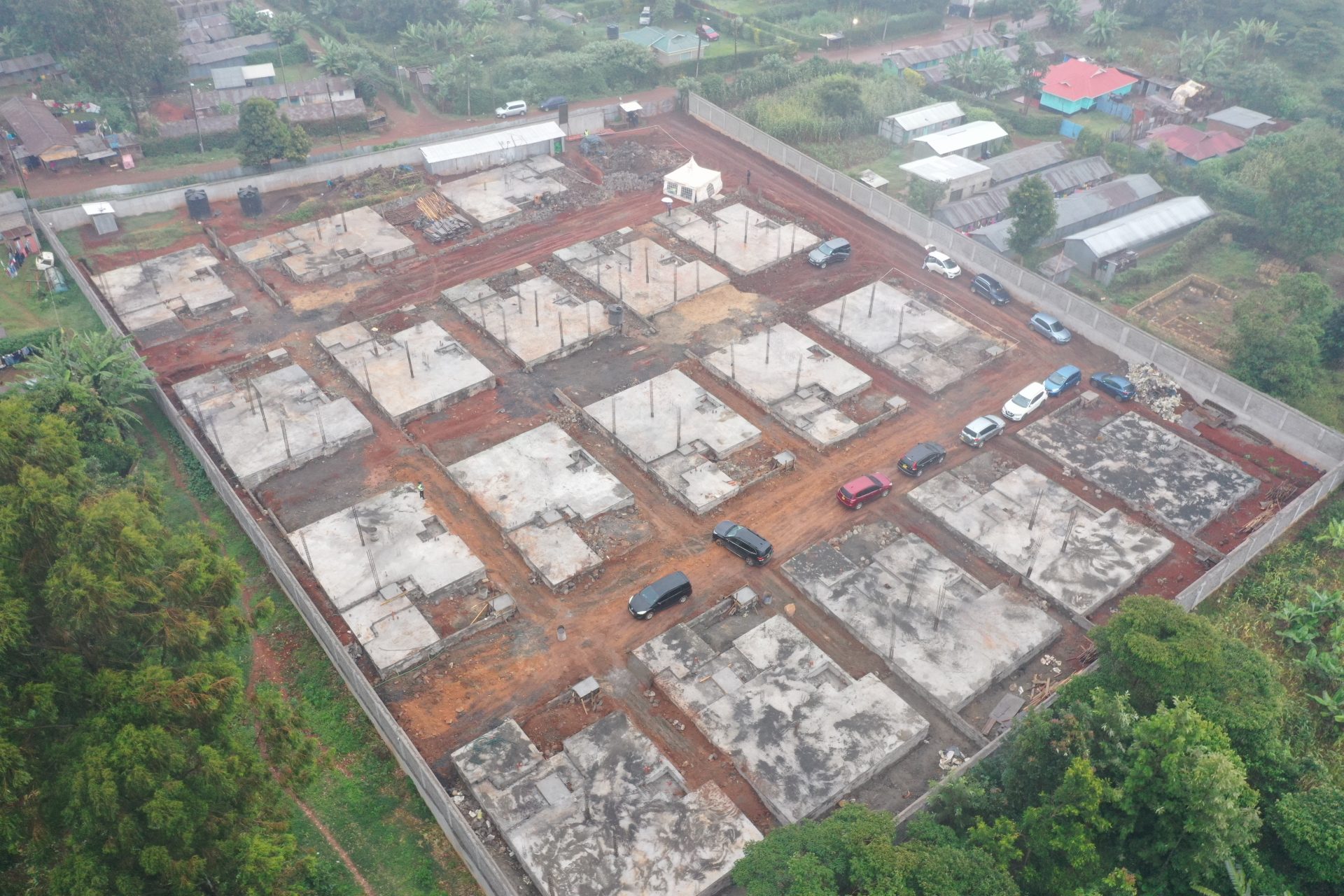
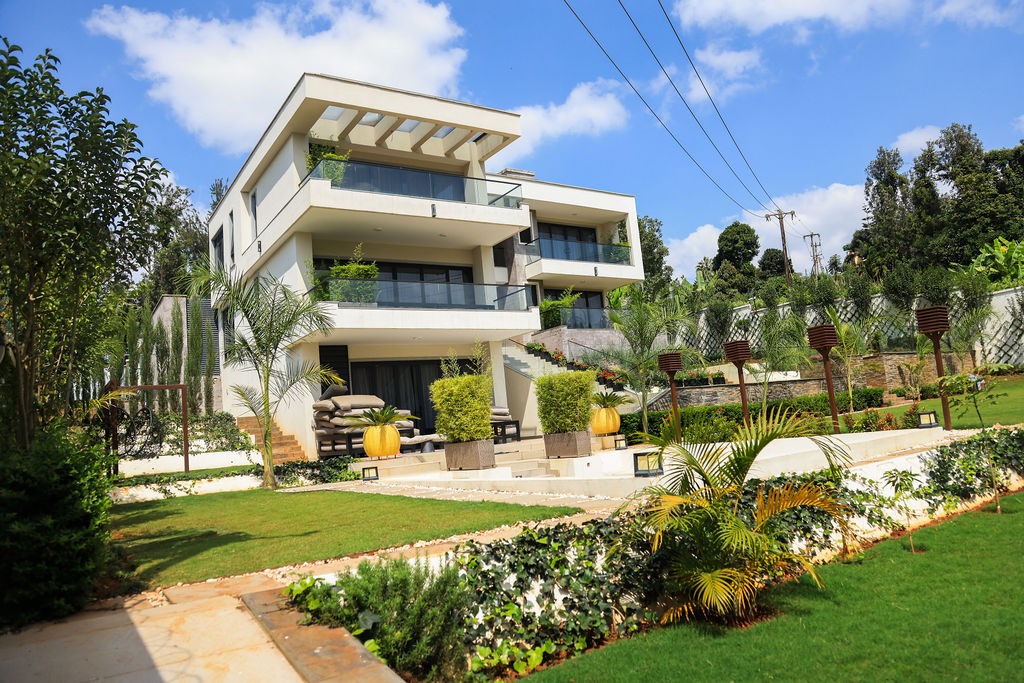
Msingi Engineering Group (Msingi) is an NCA-registered design-build contractor and property developer in Nairobi. Building communities is one of its three service lines: securing land, planning infrastructure and amenities, and building homes, in one process from first conversation to title. Msingi has delivered estate infrastructure (roads, drainage and lighting) at 143 Brook View, is building Goshenville, a Msingi family community with 18 foundations underway (see Goshenville), and developed Faraji Marijani, a walled, gated estate of eight private pool villas in Galu, Diani, where each villa sits on a titled quarter-acre plot. Its civil works team builds roads, drainage, sewer, water reticulation and power. To discuss a community or estate project, start an enquiry.
Frequently asked questions
What approvals does a gated community need in Kenya?
A gated community normally needs county development permission for any change of user, the subdivision and the building plans; Land Control Board consent if the land is agricultural; a NEMA environmental licence; NCA project registration before construction; and utility approvals for water, sewer and power. The exact list depends on the land, the county and the number of units, so confirm it with your planner and advocate.
Does a gated estate need an environmental impact assessment?
Yes, housing developments are listed for environmental assessment under Kenyan law. NEMA treats new housing estates of more than 100 units as high-risk projects, which need a full environmental assessment study. Smaller multi-dwelling schemes fall into a lower risk category with a shorter report. A NEMA-registered environmental expert should screen the project early, because the licence is needed before works start.
How do I get a title deed for a house in a gated community?
In a plot-based estate, the developer subdivides the land, the county approves the scheme, the registry issues a title for each plot, and that title is transferred to you on completion. In a townhouse or apartment scheme, the units are registered under the Sectional Properties Act 2020, and each owner receives a sectional certificate of title or lease. Ask your advocate to confirm the stage reached before paying.
What is the difference between a subdivided plot title and a sectional title?
A subdivided plot title covers a defined piece of land that you own on its own, with your house on it. A sectional title covers a unit within a building or scheme, plus a share of common property that all owners hold together and manage through a management corporation. Sectional titles are used for apartments and townhouses that share land or structures.
Who pays for roads and maintenance in a gated estate?
The developer normally pays to build the estate roads, drains, water and power systems, and recovers that cost in plot or house prices. After handover, homeowners usually pay a service charge to a management company or management corporation, which maintains the roads, security, lighting and shared areas. Ask for the budget and rules before you buy.
Can foreigners buy a home in a gated community in Kenya?
Yes, but under Article 65 of the Constitution of Kenya, non-citizens may hold land only on leasehold of up to 99 years. A foreign buyer's title must reflect this, so a freehold plot would be held under a lease for the non-citizen. Take independent advice from a Kenyan advocate before signing any agreement.
Sources
- Physical and Land Use Planning Act, No. 13 of 2019 (Kenya Law)
- The Physical and Land Use Planning Act 2019 (Mondaq)
- Physical and Land Use Planning (General Development Permission and Control) Regulations 2021 (Kenya Law)
- Land Control Act (Kenya Law)
- EMCA (Strategic and Integrated Environmental Assessments and Environmental Audits) Regulations 2025, Legal Notice 52 of 2025 (Kenya Law)
- Environmental impact assessment study report, residential development, Riverside (NEMA)
- FAQs on sectional properties law in Kenya (DLA Piper Africa)
- Kenya's land transfers in gazetted towns/municipalities to be charged 4% under Stamp Duty Act (EY)
- State Department for Lands accelerates digital transformation of land services
- Project Registration (National Construction Authority)
- Constitution of Kenya, Article 65: Landholding by non-citizens (Kenya Law Reform Commission)
Planning a build?
Tell us about your plot, plans and timing. A Msingi partner will call you within one working day.
Start your enquiry