



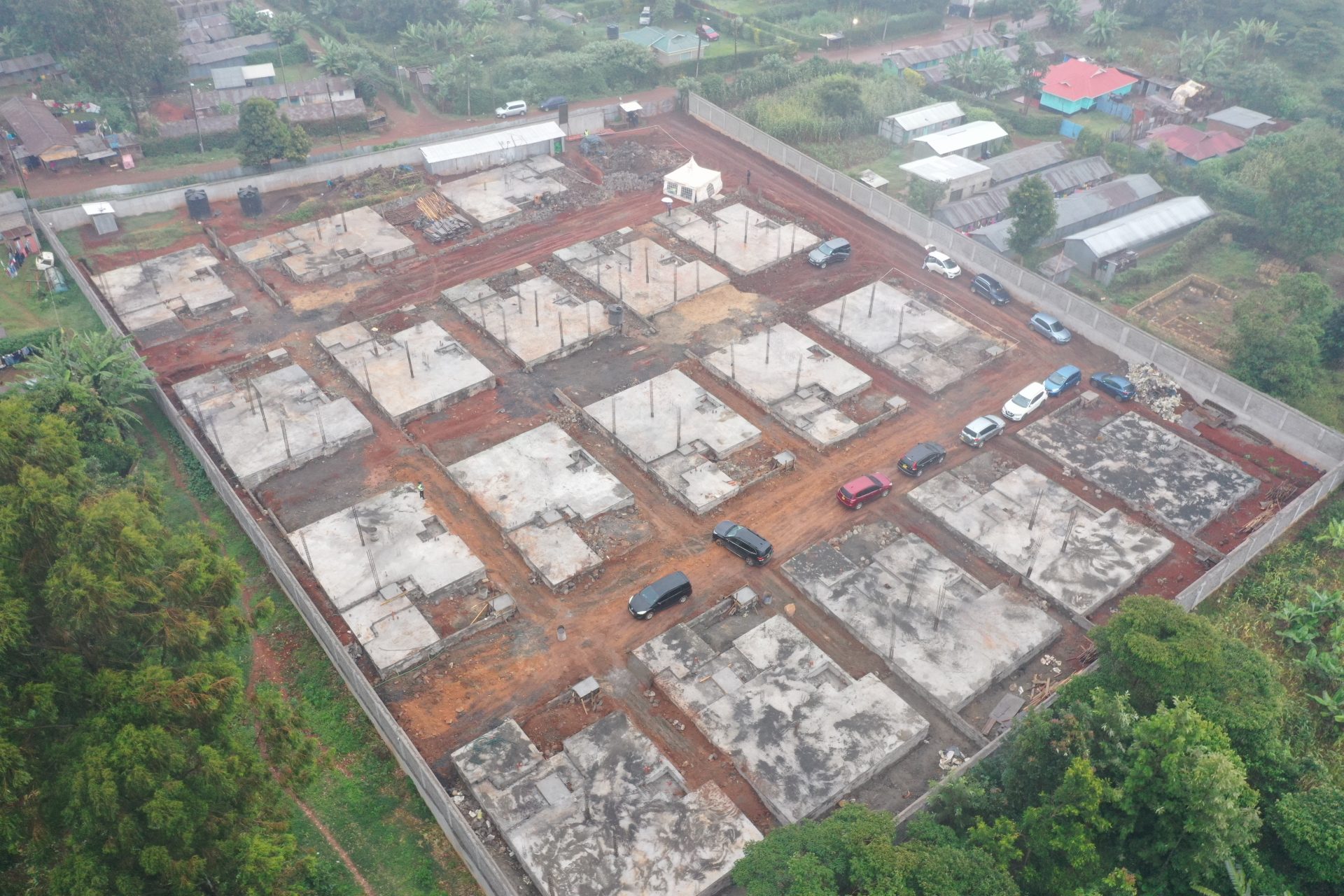
Building a house in Kenya from the diaspora is one of the most common ways Kenyans abroad invest at home, and one of the most common ways they lose money. The problems are rarely bad luck: they come from unverified land, informal builders, cash sent without paperwork and nobody independent checking the work. This guide sets out a process that lets you build from abroad with the same protections you would have if you lived next door to the site.
Key takeaways
- Kenyans abroad sent home about US$5.04 billion (KSh 649.5 billion) in 2025, according to Central Bank of Kenya data reported by Business Daily.
- Verify the land first: an official search, a licensed surveyor's check of the beacons and an advocate's review should come before any deposit.
- Under the Land Registration Act, 2012, a registrar will only accept documents signed by an agent who holds a power of attorney, so keep it specific to one parcel and one transaction.
- Every contractor must be registered with the National Construction Authority (NCA) and hold a valid practising licence, which expires on 30 June each year.
- Pay only into company bank accounts, in stages, against work certified by a professional you appoint, and keep every receipt and certificate.
Why do diaspora building projects go wrong?
Most losses come from a handful of patterns. Land is bought without a proper search, or from someone who is not the true owner. A relative or friend is asked to manage the project without the time or technical knowledge to do so. Money goes to individuals by mobile money or cash, with no contract, drawings or bill of quantities (BQ, a priced list of every item of work and material). Work is done by an unregistered builder, so quality and safety are never checked.
None of this is unique to the diaspora, but distance makes each problem harder to spot and slower to fix. The answer is to replace trust in individuals with documents, professionals and verifiable checks.
Step 1: How do you make sure the land is genuine?
Never send a deposit for land you have not verified. At a minimum:
- Do an official search. Section 34 of the Land Registration Act, 2012 entitles anyone to an official search of a parcel's register on payment of the prescribed fee. For registries on Ardhisasa, the Ministry of Lands' online platform, this can be done online; the State Department for Lands lists Nairobi, Murang'a, Isiolo and parts of Mombasa among the onboarded registries.
- Check the ground. Ask a surveyor licensed by the Land Surveyors' Board to confirm the beacons, plot size and access road against the survey records.
- Use your own advocate. Your advocate, not the seller's, should review the search, the seller's identity and authority, spousal consent and any planning restrictions, and hold the purchase money until transfer.
Ardhisasa had service interruptions in September 2026, as Kenyans.co.ke reported, so allow time for searches and transfers. Our full land due diligence checklist covers each check in detail.
Should you give someone a power of attorney?
A power of attorney (POA) lets someone in Kenya sign documents on your behalf. Section 48 of the Land Registration Act says the registrar will not accept an instrument signed by an agent unless the agent holds a power of attorney executed and verified in line with section 45, and the original (or a certified copy) must be filed.
To limit risk:
- Make it specific. Name the parcel, the transaction (for example, "purchase and registration of parcel X") and an end date, rather than a general POA over all your affairs.
- Choose the attorney carefully. An advocate is often a safer choice than a relative, because advocates are regulated professionals answerable for how they act.
- Follow your advocate's instructions on signing abroad. Documents signed outside Kenya must be witnessed and verified in a way the registry will accept.
- Revoke it when the job is done, and keep copies of the registered POA and revocation.
For building work, you usually do not need a POA at all. A written contract with the builder, signed by you, is enough.
Who should you hire to design and build?
A house needs a professional team, not just a builder. The core roles are an architect, a structural engineer, a quantity surveyor (QS) and an NCA-registered contractor. Section 15 of the National Construction Authority Act bars anyone from carrying on business as a contractor without NCA registration and a valid practising licence, as the NCA explains. The NCA's registration FAQs note that practising licences expire on 30 June every financial year, so check the current status, not just a certificate from an earlier year.
You can engage the team in two ways:
| Approach | How it works | Why diaspora clients choose it |
|---|---|---|
| Traditional | You appoint designers and a QS, then tender the work to a contractor | More separation between designer and builder; more contracts for you to manage |
| Design-build | One company designs and builds under one contract | One point of responsibility and fewer handovers to coordinate from abroad |
Our guides on design-and-build vs traditional contracting and how to check if a contractor is NCA registered go further. Whichever route you take, it is worth appointing an independent QS or engineer to certify work on your behalf.
How should you pay from abroad?
The safest rule is simple: pay for work that has been done and checked, not for promises.
| Stage | What should be complete | Evidence before you pay |
|---|---|---|
| Mobilisation | Signed contract, approved drawings, site set up | Contract, approval documents, site photos |
| Substructure | Foundations and ground-floor slab | Engineer's inspection, photos and video |
| Superstructure | Walls, columns, upper slabs | Engineer's inspection, measured valuation |
| Roofing | Roof structure and covering | QS valuation, drone or video walk-through |
| Finishes and services | Plaster, floors, plumbing, electrics, joinery | QS valuation, test results |
| Practical completion | House ready to use, snag list agreed | Handover inspection, as-built documents |
Some practical points:
- Pay companies, not people. Payments should go to the contractor's company bank account named in the contract, never to a site manager's personal phone or account.
- Buy materials through the contract. Sending money to a relative to buy cement and steel is where many budgets disappear.
- Hold back a retention. Many contracts keep back a small percentage of each payment until defects are fixed after handover; agree the terms in writing.
- Keep a single record. Store the contract, BQ, approvals, invoices, certificates and receipts in one shared folder.
Our guide to avoiding construction cost overruns explains BQs, contracts and milestone payments in detail.
How do you monitor construction from abroad?
Remote monitoring works well if it is agreed before work starts:
- Weekly reports with dated photos and short videos taken from the same fixed points each time.
- Live video walk-throughs at key stages, such as before concrete is poured, so the engineer can show you the steel reinforcement.
- Independent inspections by your own engineer or QS at each payment stage.
- NCA checks. The NCA website has a public search for registered projects and publishes a site board guide, so you can confirm your project appears on the register.
- A visit if you can. Time a trip for a key stage, such as the roof or finishes, rather than the opening ceremony.
What approvals and paperwork do you need?
You will need county approval of architectural and structural drawings, and in some cases environmental and other approvals, before work starts. The contractor must be NCA-registered, and the project should be registered with the NCA, which runs project registration and a public search of registered projects. Make sure approvals are in your name and that you hold the original documents or certified copies. Our guide to building plan approval in Nairobi walks through each step, and how long it takes to build a house in Kenya helps you plan visits and cash flow.
How should you budget for currency and price changes?
If you earn in another currency, exchange-rate movements change what your money buys. Construction prices also move: the Kenya National Bureau of Statistics reported that construction input prices rose 5.73% between the first and second quarters of 2026, according to Kenyans.co.ke. Agree a contract price in Kenyan shillings, keep a contingency, and fund each stage before it starts rather than mid-way, so work does not stop and stand idle.
How Msingi can help
Msingi Engineering Group (Msingi) is an NCA-registered design-build contractor based at Applewood Adams on Ngong Road, Nairobi. Architecture, structural engineering and MEP (mechanical, electrical and plumbing) design are coordinated by one accountable team, which gives clients abroad a single point of contact. Msingi works to clear scopes and defined costs, with direct, proactive progress updates and realistic timelines through to handover. It has delivered more than 20 projects, including family homes in Thome, Karen and Tatu City. For eighth-acre and quarter-acre plots, its Family Typology homes are fully engineered designs for predictable cost and delivery. You can reach Msingi on WhatsApp at +254 143 652 519 or start an enquiry online.
Frequently asked questions
Can I build a house in Kenya while living abroad?
Yes. Many Kenyans abroad build successfully by verifying the land through their own advocate, appointing a professional design team and an NCA-registered contractor, and paying in stages against independently certified work. Weekly photo and video reports, live walk-throughs at key stages and a visit during construction make remote oversight practical. Avoid informal arrangements with relatives or unregistered builders.
Do I need a power of attorney to build in Kenya?
Not usually for construction. You can sign the building contract yourself and send it by courier or e-signature if both sides agree. A power of attorney is mainly needed for land transactions you cannot attend, such as signing a transfer. Section 48 of the Land Registration Act requires it for agents signing land documents, so keep it specific, time-limited and prepared by your advocate.
How do I avoid being conned when buying land from abroad?
Never pay a deposit before your own advocate has done an official search and a licensed surveyor has confirmed the beacons on the ground. Check the seller's identity, authority and spousal consent, pay through your advocate rather than to the seller directly, and be wary of urgency or prices well below the market. Our land due diligence checklist explains each step.
How do I know a contractor in Kenya is genuine?
Search the contractor's name on the National Construction Authority website and confirm that its practising licence is current; licences expire on 30 June each year. Ask for the company registration documents, a physical office address, references from past clients and visits to completed projects. A genuine contractor will give you a written contract, a bill of quantities and a payment schedule tied to stages.
How should I send money for construction in Kenya?
Send money only to the contractor's company bank account named in your contract, and only against an invoice for a completed stage that your own QS or engineer has certified. Avoid sending money to individuals or relatives to buy materials. Keep every invoice, certificate and receipt in one shared folder so you have a full record.
How often should I get updates on my building project?
Agree weekly written updates with dated photos and short videos from fixed points, plus live video walk-throughs at key stages such as foundations, slabs and roofing. Ask your independent engineer or QS to inspect before each payment. Regular, structured updates make problems visible early, when they are still cheap to fix.
Sources
- Diaspora remittances record softest growth in 15 years — Business Daily, 19 January 2026
- Land Registration Act, No. 3 of 2012 — FAOLEX copy of the Act
- Land Registration Act — Kenya Law
- State Department for Lands expands digitization in Mombasa, bringing more land transactions to Ardhisasa — Ministry of Lands, 17 July 2026
- ArdhiSasa Goes Down Again, Users Warned of Disrupted Land Services — Kenyans.co.ke, 21 September 2026
- Land Surveyors Board Warns Landowners & Buyers Against Fake Survey Services — Kenyans.co.ke
- Local Contractor Registration — National Construction Authority
- Contractor Registration FAQs — National Construction Authority
- Construction Costs Increased by 5.73% Amid Rising Fuel, Transport Prices — KNBS Report — Kenyans.co.ke, 21 July 2026
Planning a build?
Tell us about your plot, plans and timing. A Msingi partner will call you within one working day.
Start your enquiry