How long it takes to build a house in Kenya is one of the first questions homeowners ask, and one of the hardest to answer with a single number. The construction timeline in Kenya has three distinct phases: design, approvals and building on site. Each has its own drivers, and the approvals phase in particular is partly outside your control. This guide breaks down each phase with the statutory periods and published data that apply, and explains how to plan around the most common delays.
Key takeaways
- Architects reported an average of 13.1 weeks, and a range of 2 to 25 weeks, to obtain building approval through Nairobi's online system in 2025.
- The Physical and Land Use Planning Act, 2019 gives counties 30 days to decide on a compliant application and deems permission granted after 60 days without a written response.
- NEMA states that environmental impact assessment licences are issued within 45 to 90 days and advises applying at least three months before starting.
- Development permission lapses if building has not started within three years, and counties may impose conditions or fines if building works are not completed within five years.
- Kenya's main rainy seasons are the March to May long rains and the October to December short rains, which affect excavation, foundations and roofing.
How long does it take to build a house in Kenya?
Think of the project as three phases that run largely in sequence. The table shows what drives each phase and what published data say about it.
| Phase | What happens | Published timelines | What drives the duration |
|---|---|---|---|
| Design | Brief, surveys, architectural, structural and MEP drawings, bill of quantities | No statutory period | How settled your brief is, number of revisions, site surveys |
| Approvals | County permission, NEMA decision, NCA registration | County: 30-day decision, 60-day deemed approval (PLUPA 2019); Nairobi average 13.1 weeks in 2025 (AAK); NEMA licence 45–90 days; NCA evaluation 7 working days after site visit | Completeness of documents, county system performance, agency comments |
| Construction | Foundations to finishes and external works | Set by the contractor's programme | House size and form, ground conditions, funding, weather, inspections |
| Handover | Snagging, final inspection, occupation certificate | County-specific | Number of defects, county inspection, any outstanding fees or repairs |
The honest answer is that a fully funded project with a settled design moves through these phases far faster than one where funding or decisions arrive in pieces. Business Daily's March 2025 report on homeowners' building experiences included one owner who built as funds allowed and said the house took him two years.
How long does the design stage take?
There is no statutory period for design, and it is the phase you control most. A custom design moves through concept sketches, developed drawings, structural and MEP (mechanical, electrical and plumbing) design and, finally, a bill of quantities (BQ) prepared by a quantity surveyor. Each round of changes adds time, and each change made after the BQ means re-pricing.
Three things shorten it: a clear written brief (rooms, floor area, finish level and budget), early site information such as a topographical survey and, where the ground is uncertain, a soil investigation, and quick decisions at each review. Using a standard, already engineered house design removes most of the design phase altogether.
How long does building approval take in Kenya?
On paper, the Physical and Land Use Planning Act, 2019 sets a clear clock. The county circulates an application to other agencies within 7 days, those agencies comment within 14 days, and the county decides on a compliant application within 30 days. If you receive no written response within 60 days, permission is assumed to have been given.
In practice, the Architectural Association of Kenya's Status of the Built Environment Report 2025 found an average of 13.1 weeks to get approval in Nairobi, with cases from 2 to 25 weeks. Across counties, the report found digital systems had cut approval times to 3–8 weeks, against 9–26 weeks or more under manual systems, although only eight counties had online permitting in 2025.
The other approvals run alongside or after county permission:
- NEMA: lower-risk projects submit a summary project report, which NEMA says is screened within five days; NEMA's licensing page states that EIA licences are issued within 45 to 90 days.
- NCA project registration: the owner applies within 30 days of awarding the contract, and the NCA's FAQs put evaluation at about seven working days after an on-site visit.
Our guide to building plan approval in Nairobi and Kenya explains each step and its documents.
How long does construction take on site?
The construction phase is set by the contractor's programme, a schedule showing each stage of work, its duration and its sequence. Ask for one before you sign, and check it is realistic for your design. For a sense of scale, The Standard reported in 2021, in an article on panelised building systems, that "a normal bungalow would take six months to complete" using conventional methods. Larger houses, storeys, difficult ground and higher-specification finishes all lengthen that.
A conventional house is built in this order, and each stage should be inspected before the next begins:
- Site clearance and setting out
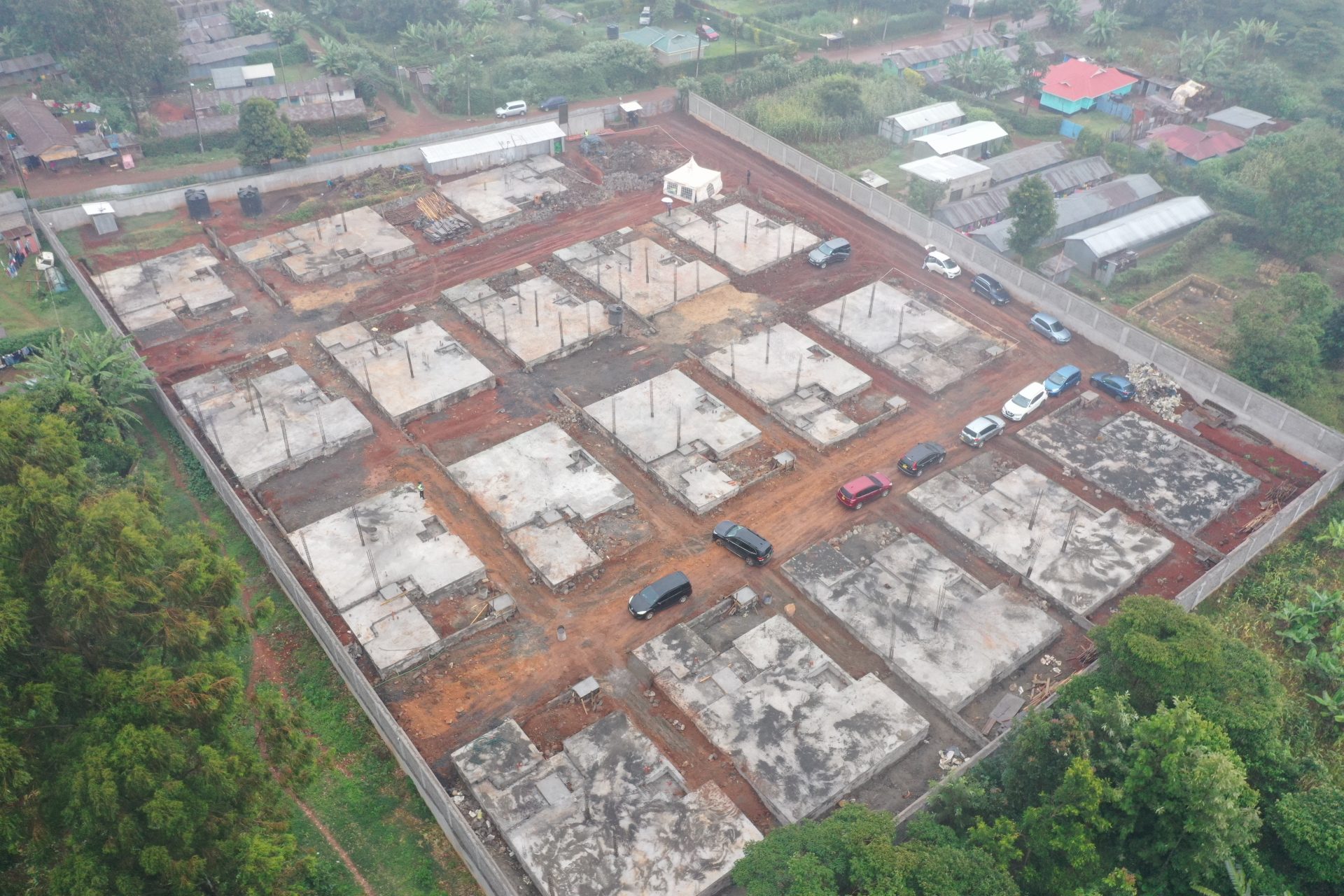
- Excavation, foundations and ground slab
- Walls, columns, beams and any upper floor slabs
- Roof structure and covering
- Electrical, plumbing and drainage rough-in
- Plastering, ceilings, flooring, joinery and painting
- Fittings, external works and landscaping
Inspections and payment certification add time between stages, and that is a good thing. KCB, for example, releases its residential construction mortgage in stages, with a bank-appointed quantity surveyor confirming each stage before the next tranche is paid. Build that into your programme rather than treating it as a delay.
What delays house construction in Kenya?
Most delays fall into a few predictable groups:
| Cause of delay | Why it happens | How to reduce it |
|---|---|---|
| Cash flow | Funds arrive later than the work needs them | Secure funding before starting; tie payments to certified stages |
| Design changes | Decisions made on site instead of on paper | Finalise drawings and BQ before tender; price every change first |
| Approval bottlenecks | System downtime, missing documents, agency comments | Complete, professionally prepared submissions; follow up early |
| Weather | Rain stops excavation, concreting and roofing | Plan groundworks and roofing around the rainy seasons |
| Material supply and prices | Shortages and price rises interrupt procurement | Order key materials early; agree how price changes are handled |
Business Daily's 2025 report on homeowners' experiences named weather, material shortages and price changes as common causes of delay, and noted that structures left half-built for long periods can weaken and become more expensive to repair. Material prices remain a live risk: the Kenya National Bureau of Statistics reported construction input prices rising 5.73% in the second quarter of 2026 alone. Our guide to avoiding construction cost overruns covers contracts and payment terms that limit these risks.
When is the best time to start building in Kenya?
Kenya has two main rainy seasons: the long rains from March to May and the short rains from October to December. Heavy rain slows excavation and foundations, makes site access difficult and holds up roofing. The Star reported in June 2026 that the Kenya Meteorological Department expected June to August to be dry in most parts of the country, with enhanced rainfall in the October to December season.
A practical approach is to work backwards: aim to have approvals in hand and a contractor appointed so that excavation and foundations fall in a drier window, and so the roof is on before the next rains. Since approvals in Nairobi averaged more than three months in 2025, that usually means submitting well before you hope to break ground.
How can you build a house faster without cutting corners?
- Fund the project before you start. Funding gaps are a frequent reason projects stall, as the homeowner accounts in Business Daily's 2025 report show.
- Finish the design first. A complete set of drawings and a BQ before tender avoids redesign on site.
- Submit complete approval documents. Plans prepared and signed by registered professionals, with every required attachment, reduce queries.
- Use an integrated team. When design, engineering and construction sit with one accountable team, information flows faster and fewer questions bounce between firms. Our guide to design-and-build vs traditional contracting compares the two routes.
- Consider a standard design. A proven, already engineered design removes much of the design phase and reduces surprises on site.
- Plan for inspections and the weather. Build them into the programme so they are not treated as delays.
Are there legal time limits for building a house in Kenya?
Yes. Under section 64 of the Physical and Land Use Planning Act, 2019, development permission lapses if building has not started within three years of the permission, although the county may extend it by one year. Section 65 allows a county to impose conditions or a fine if building works are not completed within five years. Check the conditions on your own approval, and ask your architect or advocate if you expect to pause the project.
How Msingi can help
Msingi Engineering Group (Msingi) is a Nairobi design-build contractor registered with the National Construction Authority (NCA) as a building works contractor, with a current annual practising licence. Architecture, structural engineering and MEP are coordinated by one accountable team, and Msingi's approach is built on clear scopes, defined costs, realistic timelines and direct, proactive progress updates through to handover.
For families who want predictable delivery, Msingi's Family Typology homes are standard, fully engineered prototype designs for eighth-acre and quarter-acre plots, from 150 m² to 400 m², intended for predictable cost and predictable delivery. Plans, finishes and pricing are shared on enquiry; see the Family Series or completed projects. To plan your own timeline, start at Build with Msingi.
Frequently asked questions
How long does it take to build a 3-bedroom house in Kenya?
It depends on design, approvals and funding more than bedroom count. Approvals in Nairobi averaged 13.1 weeks in 2025, according to the Architectural Association of Kenya. On site, The Standard reported in 2021 that a conventional bungalow took about six months to complete. Storeys, difficult ground, premium finishes and staged funding all extend the timeline, so ask your contractor for a written programme.
How long does building approval take in Nairobi?
The law gives the county 30 days to decide on a compliant application, and treats permission as given if there is no written response within 60 days. In practice, the Architectural Association of Kenya's 2025 report found Nairobi approvals took an average of 13.1 weeks, ranging from 2 to 25 weeks, with system downtime among the main problems reported.
Can I start building while waiting for approval?
No. Section 57 of the Physical and Land Use Planning Act, 2019 makes it an offence to start development without county development permission, with a fine of up to KSh 500,000, up to two months' imprisonment, or both. The county can also order the land restored. You can use the waiting time to finalise drawings, the bill of quantities and contractor selection.
Does the rainy season stop construction in Kenya?
Rain does not stop all work, but it slows excavation, foundations, concreting and roofing, and can make site access difficult. Kenya's main rainy seasons are the long rains from March to May and the short rains from October to December. Plan the programme so that groundworks fall in drier months and the roof is on before the next rains.
What is a construction programme and why do I need one?
A construction programme is the contractor's schedule showing every stage of work, its duration and the order in which stages happen. It lets you check progress, plan payments and spot delays early. Ask for one before signing the contract, and link payments to stages that have been inspected and certified as complete rather than to calendar dates.
Is there a deadline to finish building once approved?
Development permission lapses if building has not started within three years, under section 64 of the Physical and Land Use Planning Act, 2019, though the county may extend it by one year. Section 65 lets the county impose conditions or a fine if building works are not completed within five years. Check the conditions attached to your own approval.
Sources
- AAK Status of the Built Environment Report 2025 (Architectural Association of Kenya)
- Physical and Land Use Planning Act, No. 13 of 2019 (copy hosted by KPDA)
- Environmental Licensing (NEMA)
- Summary Project Report (NEMA)
- Project Registration FAQs (National Construction Authority)
- Construction Input Price Indices, Second Quarter 2026 (KNBS)
- How to build a house in under six weeks (The Standard, 2021)
- My building story: Ups and downs of home-ownership (Business Daily, March 2025)
- Expect three dry months before El Niño rains: Met (The Star, June 2026)
- Building your dream home: how a KCB residential construction mortgage works (KCB)
Planning a build?
Tell us about your plot, plans and timing. A Msingi partner will call you within one working day.
Start your enquiry