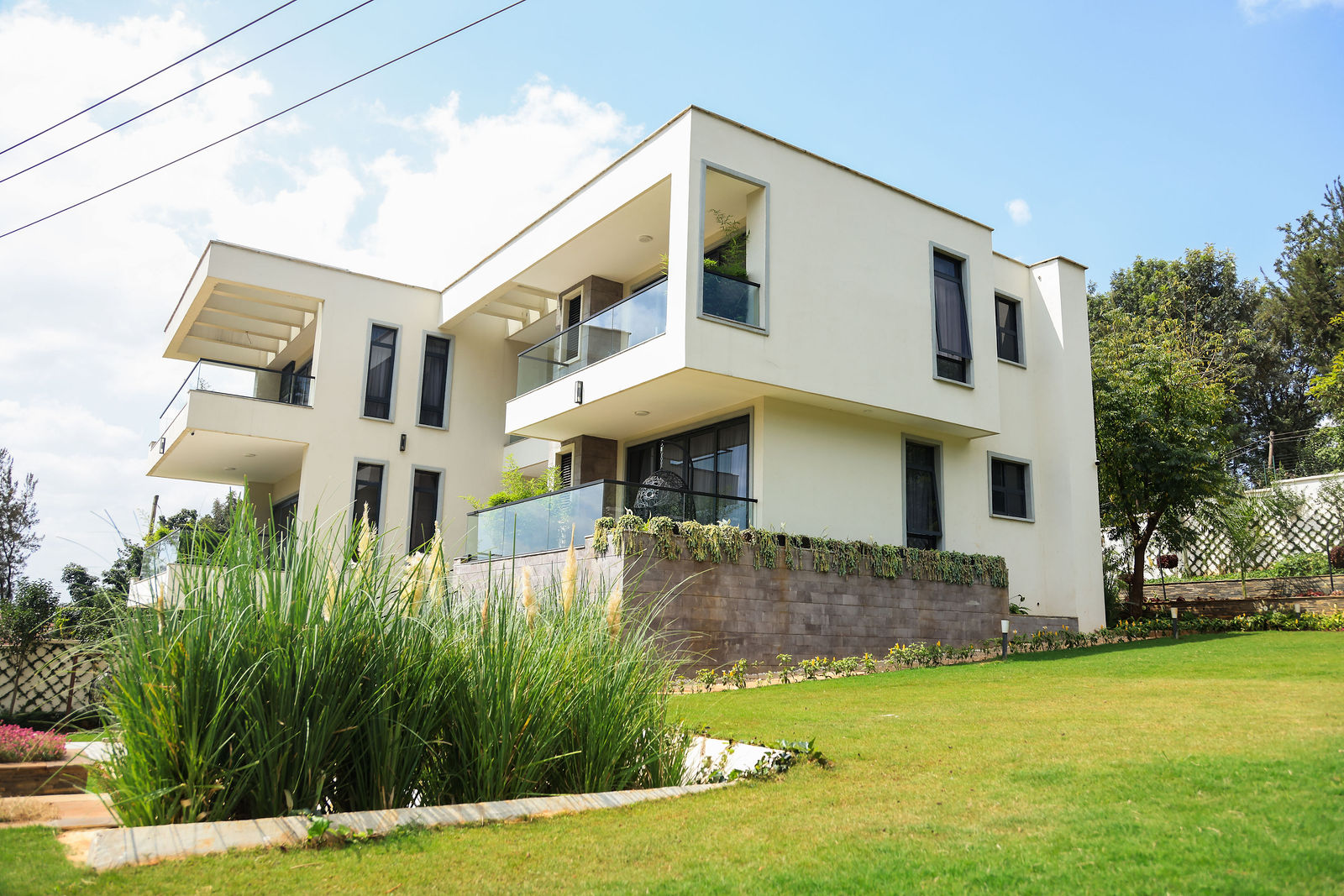
The cost of building a house in Kenya depends mainly on three things: how big the house is, how it is finished, and where it is built. Professionals price homes per square metre (m²) of floor area, so the quickest way to a realistic budget is to multiply a current rate by the size of the house you want, then add the costs that sit outside the building itself. This guide gives the latest published rates, a worked example for a three-bedroom house, and a checklist of the extras that catch people out.
Key takeaways
- The Architectural Association of Kenya (AAK) reports that a standard bungalow in Nairobi cost about KSh 54,730 per m² to build in 2025, up 12.27% from KSh 48,750 in 2024.
- Middle-class maisonettes cost about KSh 59,868 per m² and luxury maisonettes about KSh 97,730 per m² in 2025, according to the same AAK report.
- At those rates, a 150 m² three-bedroom house costs roughly KSh 8.2–14.7 million to build, depending on finish, excluding land, professional fees and approvals.
- Kenya National Bureau of Statistics (KNBS) figures show construction input prices were 3.45% higher year on year in the third quarter of 2026, so 2025 rates are a floor, not a ceiling.
- A signed bill of quantities (BQ) from a quantity surveyor is the only reliable basis for a budget on a specific design.
What does it cost per square metre to build in Kenya in 2026?
The most authoritative recent figures come from the AAK Status of the Built Environment Report 2025, which draws on a 2025 study of Nairobi construction costs by Integrum Construction. It shows rates rising across every residential type between 2024 and 2025.
| House type (Nairobi) | 2024 rate per m² | 2025 rate per m² | Change |
|---|---|---|---|
| Standard bungalow | KSh 48,750 | KSh 54,730 | +12.27% |
| Middle-class maisonette | KSh 53,800 | KSh 59,868 | +11.28% |
| Luxury maisonette | KSh 84,000 | KSh 97,730 | +16.35% |
| Standard low-rise apartments | KSh 60,435 | KSh 68,837 | +13.9% |
| Luxury apartment block | KSh 77,910 | KSh 90,013 | +15.53% |
Source: AAK Status of the Built Environment Report 2025. These are Nairobi averages; your figure will move with your design, site and specification.
Prices have kept moving in 2026. KNBS reported that its Construction Input Price Index rose 5.73% in the second quarter of 2026, driven mainly by fuel and transport, then eased 0.72% in the third quarter, leaving annual construction inflation at 3.45%. In practical terms, a budget built on 2025 rates should carry a margin for 2026 and 2027 price movements.
How much does it cost to build a 3-bedroom house in Kenya?
A three-bedroom house in Kenya can be anything from a compact bungalow of about 100 m² to a generous maisonette of 200 m² or more, so floor area matters more than bedroom count. The table below multiplies typical sizes by the 2025 AAK rates. It is arithmetic for planning, not a quotation.
| Floor area | Standard bungalow (KSh 54,730/m²) | Middle-class maisonette (KSh 59,868/m²) | Luxury maisonette (KSh 97,730/m²) |
|---|---|---|---|
| 100 m² | about KSh 5.5 million | about KSh 6.0 million | about KSh 9.8 million |
| 150 m² | about KSh 8.2 million | about KSh 9.0 million | about KSh 14.7 million |
| 200 m² | about KSh 10.9 million | about KSh 12.0 million | about KSh 19.5 million |
| 250 m² | about KSh 13.7 million | about KSh 15.0 million | about KSh 24.4 million |
Calculated from AAK 2025 Nairobi rates. Excludes land, professional fees, approvals, external works and utility connections.
If you are deciding between house types, our guide to maisonette vs bungalow vs townhouse in Kenya compares space and cost, and what you can build on an eighth or quarter acre explains how plot size limits floor area.
What drives the cost of building a house in Kenya?
Five factors explain most of the difference between two quotes for "the same" house:
- Floor area. Every extra square metre carries the full rate, so trimming corridors and oversized rooms saves more than haggling over materials.
- Finishes. Floor tiles, kitchen fittings, sanitary ware, doors and windows separate a standard house from a luxury one. AAK's luxury maisonette rate is around 63% higher than its middle-class rate.
- Building form. A storey adds stairs, a suspended slab and more structural steel, but it also uses less land and roof per square metre of floor.
- Ground conditions. Black cotton soil, slopes and rock change the foundation design. A contractor quoted by Business Daily in March 2025 estimated that foundations can take up to 20% of the total budget.
- Material prices and logistics. AAK recorded the price of a 50 kg bag of cement rising from KSh 650 in December 2022 to KSh 850 in December 2025. Fuel feeds into every delivery, which is why the KNBS index jumped when pump prices rose in 2026.
Which costs are not included in a per square metre rate?
Per-m² rates usually describe the building itself. Before you commit, ask whether a quoted rate includes or excludes each of the items below, because they are where budgets most often fall short:
| Cost item | What it covers | How it is priced |
|---|---|---|
| Land | Purchase, legal fees, stamp duty, search and transfer | Varies by location; confirm duty and fees with your advocate |
| Professional fees | Architect, structural engineer, MEP (mechanical, electrical and plumbing) engineer, quantity surveyor | Statutory fee scales, mainly a percentage of project value |
| Approvals | County development permission, NEMA environmental licence, NCA project registration | County tariffs; NEMA lists 0.1% of project cost (minimum KSh 10,000); NCA project registration is currently free |
| External works | Boundary wall, gate, driveway, landscaping, septic tank or sewer connection, borehole | Measured separately in the BQ |
| Utility connections | Power, water and sewer connection fees | Set by the utility provider |
| Contingency | Unforeseen ground conditions, design changes, price movements | A percentage of the construction sum, agreed with your QS |
Two details are worth knowing. NEMA's environmental licensing page states the environmental impact assessment (EIA) licence fee as 0.1% of total project cost with a minimum of KSh 10,000, and the National Construction Authority (NCA) states that project registration is currently free of charge. Fee schedules change, so confirm current amounts when you apply. Our building plan approval guide walks through each approval in order.
How do you get an accurate building budget in Kenya?
Published rates are a starting point. A bankable budget comes from a design and a bill of quantities (BQ): a document prepared by a registered quantity surveyor (QS) that measures every element of the building, from excavation to paint, and prices it. Banks rely on it too. KCB's residential construction mortgage lists a signed, priced BQ among its required documents and releases funds in stages as work is certified.
A practical sequence is:
- Set a target floor area and finish level, and run the numbers against current per-m² rates.
- Commission concept designs and check the area against the budget before detailed drawings.
- Get a full BQ on the final drawings and use it to compare contractor bids line by line.
- Agree a contingency and a payment schedule tied to completed stages, not to dates.
- Track spending against the BQ every month and price any change before it is built.
Cost overruns usually come from changes made during construction and from items missing in the original scope. Our guide on avoiding construction cost overruns in Kenya covers contracts and payment milestones in more detail.
Is it cheaper to build in phases or all at once?
Building in phases spreads cash flow, but it rarely lowers the total cost. Each pause means remobilising labour and equipment, and exposed structures can deteriorate. Business Daily's March 2025 report on homeowners' experiences noted that weather, material shortages and price changes cause delays, and that structures left half-built for long periods can weaken and cost more to repair.
If you must phase, finish a weather-tight stage (structure and roof) before stopping, buy key materials when you have a fixed price, and keep the BQ updated so the next phase is priced on current rates. If you are building from abroad, see our guide to building a house in Kenya from the diaspora for ways to keep control of payments.
How Msingi can help
Msingi Engineering Group (Msingi) is a design-build contractor based in Nairobi and registered with the National Construction Authority (NCA) as a building works contractor, with a current annual practising licence. Architecture, structural engineering and MEP are coordinated by one accountable team, which helps keep the design, the BQ and the build aligned with agreed costs.
For families who want cost predictability, Msingi offers Family Typology homes: standard, fully engineered prototype homes from 150 m² (three bedrooms on an eighth of an acre) to a 400 m² flagship on a quarter acre. Plans, finishes and pricing are shared on enquiry, and you can see the range on the Family Series page. To discuss your plot and budget, start at Build with Msingi.
Frequently asked questions
How much does it cost per square metre to build a house in Kenya?
According to the Architectural Association of Kenya's 2025 report, building in Nairobi cost about KSh 54,730 per m² for a standard bungalow, KSh 59,868 for a middle-class maisonette and KSh 97,730 for a luxury maisonette. KNBS data show construction input prices rose a further 3.45% year on year to the third quarter of 2026, so allow for some increase on these figures.
How much does it cost to build a 3-bedroom house in Kenya in 2026?
It depends on size and finish. Using 2025 Nairobi rates from the Architectural Association of Kenya, a 150 m² three-bedroom house costs roughly KSh 8.2 million as a standard bungalow, KSh 9.0 million as a middle-class maisonette and KSh 14.7 million with luxury finishes. These figures exclude land, professional fees, approvals, external works and utility connections.
Is it cheaper to build a bungalow or a maisonette in Kenya?
Per square metre, a standard bungalow is usually cheaper: AAK put it at KSh 54,730 per m² in 2025 against KSh 59,868 for a middle-class maisonette. A maisonette, however, fits more floor area on a smaller plot and needs less roof and foundation per square metre, so the better choice depends on your plot size and the space you need.
What is a bill of quantities and do I need one?
A bill of quantities (BQ) is a document prepared by a registered quantity surveyor that measures and prices every part of a building, from excavation to finishes. You need one to compare contractor bids fairly, to control changes during construction, and to apply for construction finance. NCA project registration also asks for a BQ summary page signed and stamped by the quantity surveyor.
Why have building costs in Kenya gone up?
The main drivers have been material prices, fuel and labour. AAK recorded cement rising from KSh 650 per 50 kg bag in December 2022 to KSh 850 in December 2025. KNBS reported that its Construction Input Price Index rose 5.73% in the second quarter of 2026, mainly because fuel and transport costs jumped, before easing slightly in the third quarter.
What approval fees should I budget for when building a house?
Budget for county development permission fees (set by each county's tariffs), the NEMA environmental licence, and NCA project registration. NEMA's licensing page lists the EIA licence fee at 0.1% of total project cost, with a minimum of KSh 10,000. NCA states that project registration is currently free. Confirm current amounts with each authority before you apply, as fee schedules change.
Sources
- AAK Status of the Built Environment Report 2025 (Architectural Association of Kenya)
- Construction Input Price Indices, Second Quarter 2026 (KNBS)
- Construction Input Price Indices, Third Quarter 2026 (KNBS)
- Construction costs rise 20pc on skyrocketing cement prices (The Standard, January 2026)
- Building a Home in Kenya Now Costs More Than Ever, New Data Shows (Mwakilishi, December 2025)
- My building story: Ups and downs of home-ownership (Business Daily, March 2025)
- Environmental Licensing (NEMA)
- Project Registration (National Construction Authority)
- Building your dream home: how a KCB residential construction mortgage works (KCB)
Planning a build?
Tell us about your plot, plans and timing. A Msingi partner will call you within one working day.
Start your enquiry